

Renewable material are produced from recycled plastic bottles. The biggest feature is low carbon and environmental protection.
The recycled plastic bottles are turned into textile materials after various sorting, high-temperature sterilization, material sorting, high-temperature cleaning, crushing, thread drawing, spinning, dyeing and weaving and other procedures.
Reusing every ton of waste mineral water bottles can reduce 6 tons of oil consumption and 3.2 tons of carbon dioxide emissions, which is equivalent to the amount of carbon dioxide absorbed by 200 trees in one year.
Several Steps To Transform Plastic Bottles Into Recycled Polyester Fibers
(1) Cleaning
First wash, the purpose is to separate the bottle body from the bottle cap; then soak with caustic soda, the purpose is to let the label stuck on the plastic sheet fall off. After two times of cleaning, the plastic sheet becomes very white and clean, which can meet the requirements of subsequent fiber production.
(2) Crush
Recyclable plastic bottles are collected and crushed and transported to the processing plant. The workers will separate the transparent plastic and the colored plastic, and then a plastic crushing production line will be used for crushing.
Shredding is one of the essential steps in the process of “turning” plastic into textiles. There are various plastic bottles of different sizes, which need to be broken into small pieces of a certain size before further recycling.
(3) Heating and melting, drawing
When spinning, the moisture of the plastic sheet is fully dried first, and then it is melted at 270°C, extruded by a screw extruder and cooled into filaments (generally including short fibers and filaments).
The staple fiber can enter the weaving process after spinning / filament deformation and other processing. Weaving methods are generally divided into two types: weaving and knitting.
(4) Dyeing and shaping
Po farbowaniu, wykańczaniu, formowaniu i innych procesach, tkanina staje się tkaniną o miękkim dotyku, która może być używana do odzieży i przedmiotów potrzebnych do życia.
Dzięki “głębokiemu czyszczeniu” w warunkach takich jak wysoka temperatura i próżnia, recyklingowany plastik PET osiągnął poziom czystości wystarczający do produkcji opakowań żywnościowych. Teraz wyrzucone butelki po napojach mogą być przetwarzane na nowe butelki po napojach, co można uznać za osiągnięcie “recyklingu”.


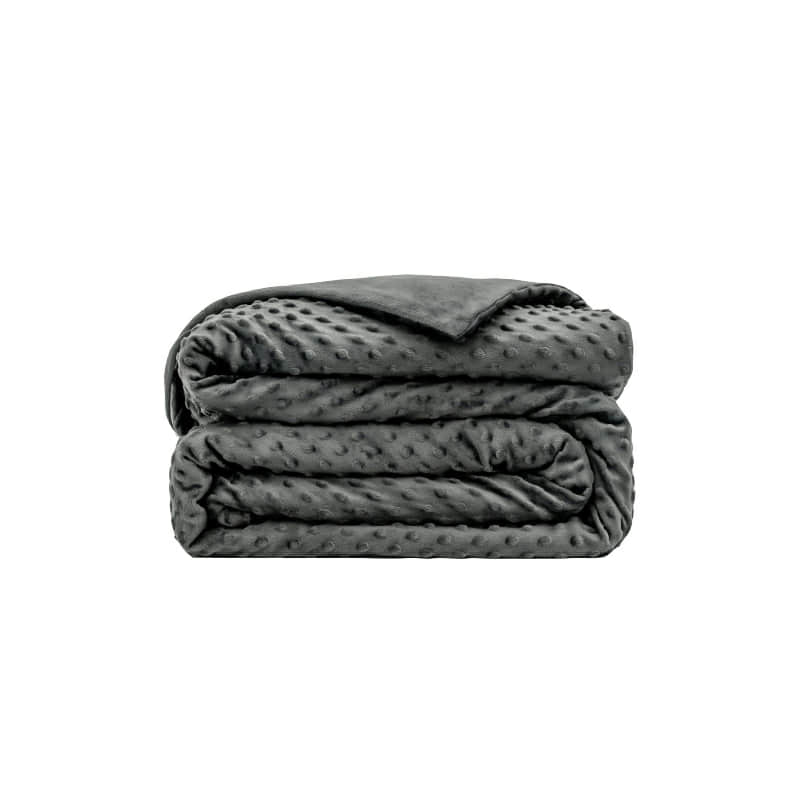
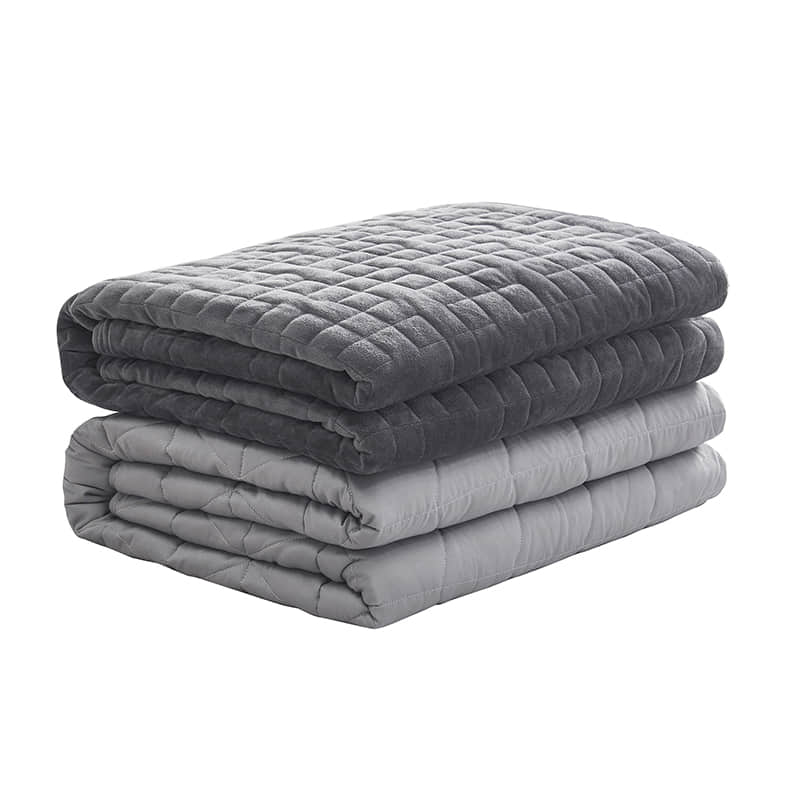
Wypełnienie dzianego koca obciążeniowego YIXI TEXTILE zaczęło używać materiałów odnawialnych wykonanych z recyklingu plastikowych butelek certyfikowanych GRS. Jest to bardziej przyjazne dla środowiska. Wspiera politykę ochrony środowiska różnych krajów. Używa także tkanin certyfikowanych OEKO-TEX.
Technologia produkcji dzianych koców obciążeniowych jest bardziej dojrzała i istnieje wiele różnych technik produkcji, aby zaspokoić różne potrzeby.
Mamy ścisły zespół kontroli jakości. W 2021 roku wskaźnik kwalifikacji produktów wynosił 99,51%. .
Jeśli jesteś zainteresowany tekstyliami domowymi wykonanymi z materiałów odnawialnych, skontaktuj się z nami. Możemy zaoferować Ci bardziej ekologiczne tekstylia domowe.

 Polish
  English
  Spanish
  Portuguese
  Russian
  German
  French
  Vietnamese
  Arabic
  Korean
  Italian
  Persian
  Thai
Thai  Turkish
  Dutch
Dutch  Indonesian