
Finding the right weighted blanket manufacturer can make or break your product line. Whether you’re an Amazon FBA seller, a retail brand, or a hospitality buyer, your supplier determines your product quality, margins, and customer satisfaction. This guide walks you through exactly what to evaluate — from certifications and materials to MOQ, pricing, and red flags to avoid.
Why Your Manufacturer Choice Matters More Than Your Design
A beautiful weighted blanket design means nothing if the manufacturer can’t deliver consistent quality at scale. The wrong supplier leads to: inconsistent stitching, uneven glass bead distribution, delayed shipments, and ultimately — negative reviews that kill your brand. The right supplier becomes a long-term partner who helps you grow.
1. Certifications: Non-Negotiable for Serious Brands
Before anything else, verify your manufacturer holds the right certifications. These aren’t just marketing badges — they’re your legal and quality safety net.
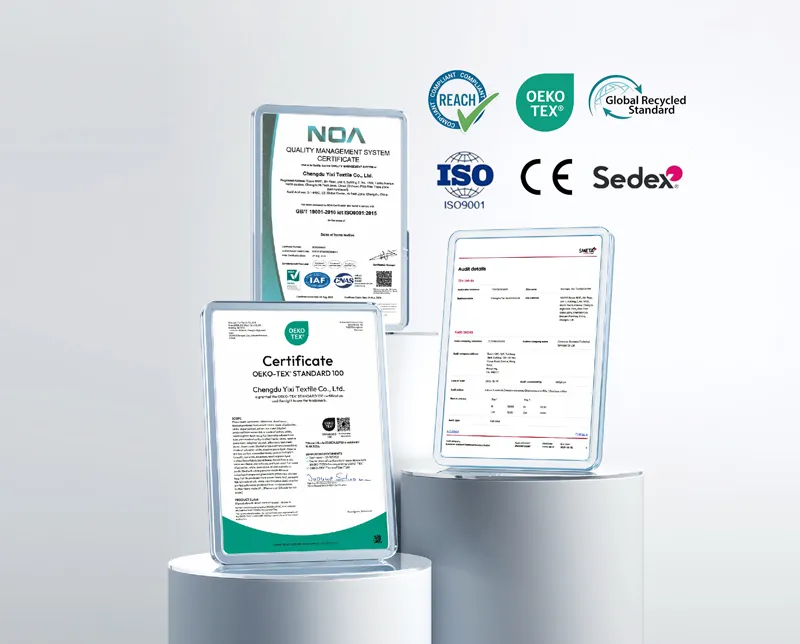
OEKO-TEX Standard 100
This is the gold standard for textile safety. OEKO-TEX certification means every component — fabric, thread, glass beads, zippers, labels — has been tested for harmful substances. For weighted blankets specifically, this matters because the filling (glass beads or plastic pellets) sits against skin for hours every night. If you’re selling in the EU, US, or Australia, OEKO-TEX is often a minimum requirement for retail placement.
BSCI (Business Social Compliance Initiative)
BSCI certification verifies ethical labor practices. European retailers like H&M, Lidl, and Aldi require BSCI compliance from suppliers. If your target market includes Europe, this certification is essential — not optional.
GRS (Global Recycled Standard)
If you’re marketing eco-friendly or sustainable products, GRS certification validates that recycled materials are genuinely used in your weighted blankets. This is increasingly important for brands targeting environmentally conscious consumers.
2. Materials & Filling: What Actually Goes Inside
The filling is the heart of a weighted blanket. Here’s what to discuss with your manufacturer:
| Fill Type | Pros | Cons | Best For |
|---|---|---|---|
| Glass Beads | Silent, even distribution, hypoallergenic | Higher cost, heavier per volume | Premium brands, medical/therapy use |
| Plastic Poly Pellets | Lower cost, widely available | Can make noise, less even distribution | Budget-friendly product lines |
| Steel Shot Beads | Very heavy, durable | Can rust if not sealed, noisy | Industrial/commercial use |
Pro tip: Ask your manufacturer about their glass bead sourcing and quality control process. The best factories use micro-glass beads (0.5-1mm) with anti-leakage stitching patterns. Poor bead quality leads to lumps, shifting weight, and customer complaints.
3. Quilting Patterns & Construction
The quilting pattern determines how well the filling stays in place:
- Square Grid (15×15cm) — Standard, cost-effective, good for most applications
- Small Grid (10×10cm or 8×8cm) — Better weight distribution, prevents bead shifting, premium feel
- Diamond Pattern — Aesthetic appeal, slightly more complex manufacturing
- Irregular/Custom Patterns — For unique designs, requires higher MOQ
Ask your manufacturer what grid sizes they can do. Factories limited to one pattern size may not be flexible enough for your product range.

4. OEM vs ODM: Which Model Fits Your Business?
OEM (Original Equipment Manufacturing)
You provide the design, specs, and branding. The factory manufactures exactly to your requirements. Best for: established brands with existing designs, specific fabric/weight combinations, and clear product specs.
ODM (Original Design Manufacturing)
The factory provides ready-made designs that you can customize with your branding, colors, and minor modifications. Best for: new brands, fast market entry, testing product-market fit without heavy R&D investment.
Key question to ask: “Can I see your existing ODM designs, and what’s the MOQ for custom modifications?” A good manufacturer will have a catalog of ready designs and flexible customization options.
5. MOQ, Lead Times & Pricing Structure
These three factors directly impact your cash flow and ability to compete:
| Factor | Industry Standard | What to Look For |
|---|---|---|
| MOQ | 200-500 pcs | Factories offering 50-100 pcs MOQ are better for testing |
| Sample Lead Time | 5-10 days | Under 7 days = responsive factory |
| Production Lead Time | 15-30 days | Under 20 days = well-managed production |
| Payment Terms | 30% deposit, 70% before shipment | Flexible terms = trusted partner |
Red flag: If a manufacturer quotes significantly below market price, ask why. Low prices often mean: recycled filling, thin fabric, no real certifications, or hidden costs added later.
6. Quality Control Process
A reliable manufacturer should be able to clearly explain their QC process. Ask about:
- Raw material inspection — Do they test incoming fabrics and beads?
- In-line inspection — Quality checks during production, not just at the end
- Final inspection — AQL (Acceptable Quality Level) sampling standards
- Third-party testing — Can they provide lab test reports for OEKO-TEX, REACH, etc.?
7. Customization & Branding Options
Your weighted blanket should feel like YOUR product, not a generic factory item. Evaluate what the manufacturer offers for:
- LOGO labeling — Woven labels, printed labels, heat-transfer labels
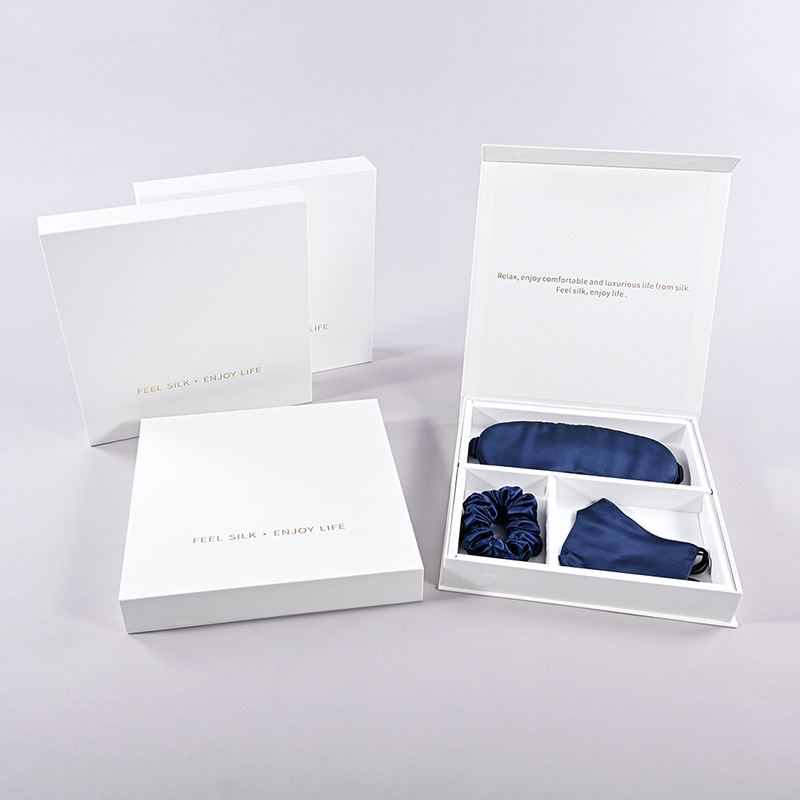
- Packaging — OPP bags, gift boxes, custom packaging design
- Insert cards — Care instructions, brand story, marketing materials
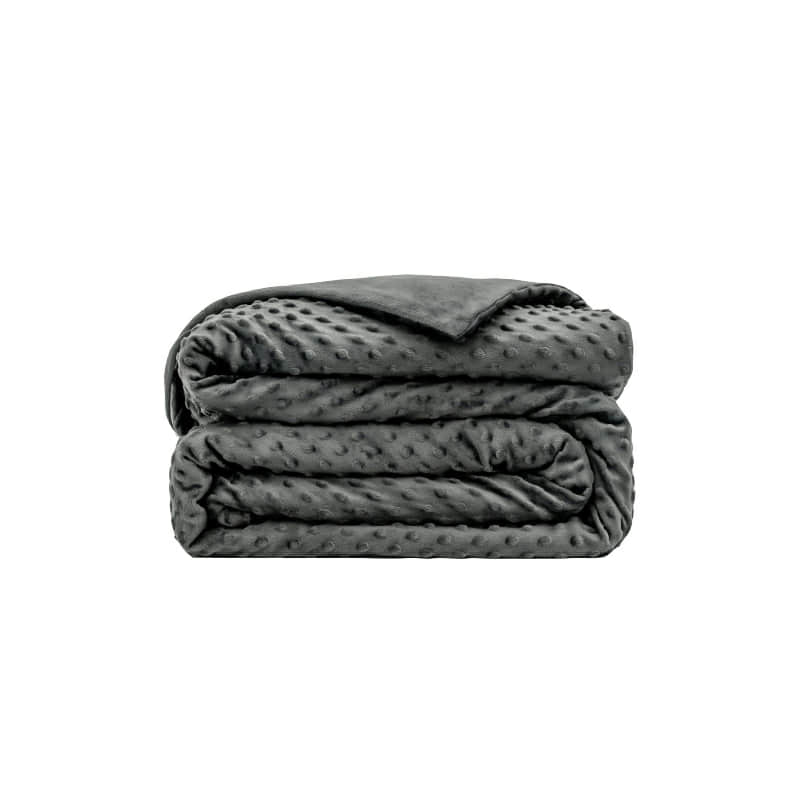
- Fabric selection — Cotton, bamboo, Minky, Sherpa, organic options
- Color matching — Pantone matching capability for brand consistency
8. Shipping & Logistics Capabilities
Weighted blankets are heavy (5-25 lbs each), making shipping a significant cost factor. Your manufacturer should offer:
- Multiple shipping options: sea freight, air freight, express (DHL/FedEx/UPS)
- DDP (Delivered Duty Paid) service for door-to-door delivery
- Experience with Amazon FBA labeling and prep requirements
- Compressed/rolled packaging to reduce shipping volume
Red Flags to Watch Out For
- No physical address — Legitimate factories have verifiable addresses
- Unwilling to provide samples — Any serious manufacturer will offer sampling
- Vague certification claims — “We have certificates” isn’t enough; ask for copies and verify numbers
- Pressure to pay 100% upfront — Standard is 30% deposit
- No English-speaking sales team — Communication issues lead to specification errors
- Can’t provide references — Ask for existing client examples or case studies
Your Weighted Blanket Manufacturer Evaluation Checklist
Use this checklist when comparing suppliers:
- ☐ OEKO-TEX Standard 100 certified
- ☐ BSCI or equivalent social compliance certification
- ☐ In-house R&D and design capabilities
- ☐ MOQ under 200 pieces for first order
- ☐ Sample lead time under 7 days
- ☐ Production lead time under 25 days
- ☐ Flexible quilting patterns (at least 3 grid sizes)
- ☐ Multiple fabric options (cotton, bamboo, Minky, Sherpa)
- ☐ Custom LOGO, labeling, and packaging available
- ☐ Clear QC process with inspection reports
- ☐ DDP shipping capability
- ☐ Responsive English-speaking sales team
- ☐ Competitive pricing with transparent breakdown
Ready to Start?
Choosing the right weighted blanket manufacturer isn’t just about price — it’s about finding a partner who understands your market, maintains quality standards, and can scale with your business. Take the time to evaluate multiple suppliers, request samples, and verify certifications before committing to a bulk order.
If you’re looking for an OEKO-TEX certified weighted blanket manufacturer with flexible MOQ, fast sampling, and full OEM/ODM capabilities, contact our team for a free consultation and quotation. We respond within 10 hours.
 English
  Spanish
  Portuguese
  Russian
  German
  French
  Vietnamese
  Arabic
  Korean
  Italian
  Persian
  Thai
Thai  Turkish
  Dutch
Dutch  Polish
  Indonesian