
A home textile RFQ should identify the product, materials, finished dimensions, quantity by variant, sample requirements, labels, packing and delivery basis. Mark unresolved choices as separate options and ask suppliers to list deviations. Comparable quotations begin with the same specification and commercial assumptions, not merely the same product name or photograph.
When a buyer asks for a blanket or pillow price, the supplier still has to decide what to price. If the enquiry leaves the fabric, filling or retail pack open, each supplier may choose a different starting point. The resulting quotations can be accurate descriptions of different products. A useful RFQ makes those assumptions visible before your team compares unit costs.
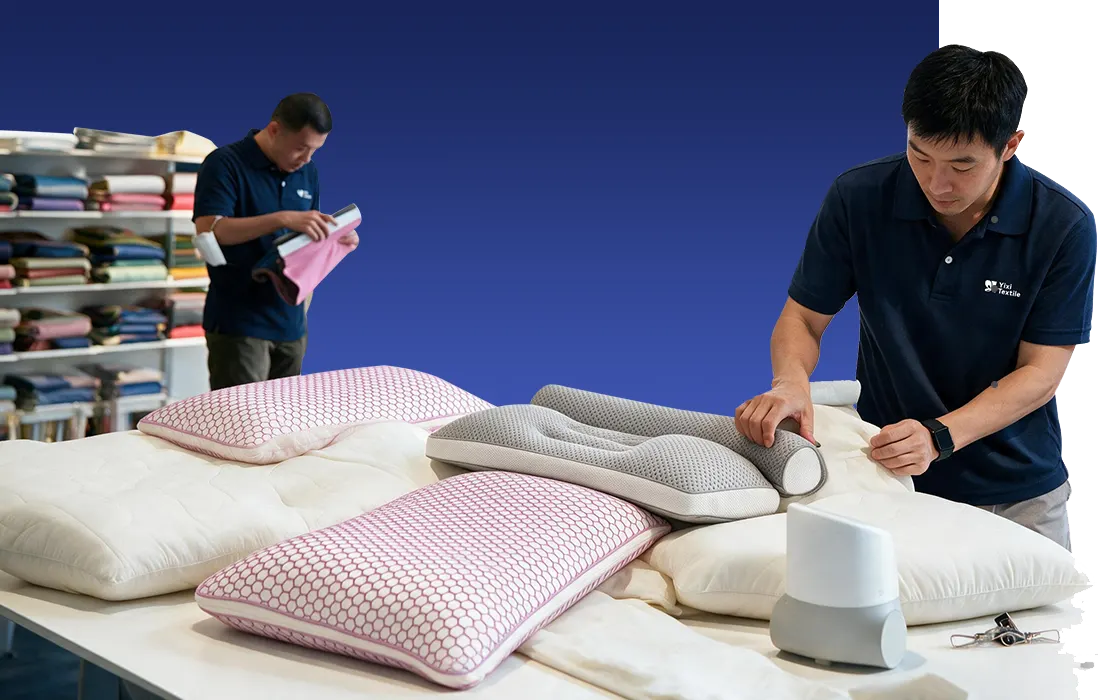
Give the enquiry an identity and a decision
Use a project name, item code and revision date. State whether you need an initial feasibility discussion, a comparison between defined alternatives or a quotation against a finished specification. This tells the supplier how much remains open.
Identify your buying channel and destination market. An outdoor brand developing a printed puffy blanket needs different information from a hotel distributor replacing an established pillow. Provide the delivery destination as well as the selling market when they differ. Avoid including confidential customer information unless it is needed for the quotation.
For an initial YIXI enquiry, the product, estimated quantity and main specification questions are a useful starting point. The home textile customization overview can help your team identify which parts of the project it wants to discuss.
Write the product specification in components
Name the finished article first, then its parts. A duvet cover is different from a filled duvet. A pillow cover is different from a complete pillow. A weighted blanket insert supplied alone is different from an insert-and-cover set. Put those distinctions into the item description.
| Product | Main specification inputs | Detail often left ambiguous |
|---|---|---|
| Verzwaarde deken | Finished dimensions and weight; shell, inner layers, fill and pocket construction | Whether a removable cover and its attachments are included |
| Kussen | Core construction, finished shape and height, cover, closure and packing | Whether the quoted dimensions describe the core or the covered product |
| Kussensloop | Composition by side, fabric weight where relevant, finished size and closure | Whether both sides use the same fabric |
| Bedding set | Component list, pieces per set and finished dimensions of every component | Whether a set includes a filled insert or only its cover |
| Camping blanket | Shell, backing, fill, quilting, unfolded size and packed configuration | Whether the carry bag, print and labels are included |
State units beside values. Use centimeters or inches consistently and distinguish fabric weight in grams per square meter from the weight of the finished article. A product’s total weight does not establish the weight or composition of each layer.
Where a dimension is critical, identify the measurement point and acceptable tolerance. For a fitted sheet, the intended mattress dimensions and fit requirement are useful inputs; a size name such as “queen” is not a complete measurement specification.
Separate fixed requirements from supplier proposals
You do not need every decision finished before approaching a supplier. You do need to explain which decisions are unfinished. Mark a material as a proposed option, describe the intended outcome and request alternatives as separate quotation lines.
For example, a brand might fix the finished blanket dimensions and request two backing options. Ask each supplier to quote both against the same remaining requirements. Do not allow an alternative backing, reduced finished weight and different pack to become one unexplained “equivalent” offer.
Add a deviations section to the response. It should identify the requested requirement, proposed alternative and effect on price, sampling or timing. A clearly described alternative gives you a decision. An assumption hidden inside a unit price creates a risk of ordering something you did not intend.

Attach a quantity and packaging matrix
Enter quantities by style, color, size and retail-pack configuration. Ask how the minimum applies to each line and whether material, label or box minimums are separate. This is especially useful when a collection includes several related products.
Describe the retail pack and export carton separately. State whether individual bags, gift boxes, printed inserts, barcodes and carton marks are required. If artwork has not been approved, identify the expected format and ask for packaging assumptions to be shown in the quote.
For a bedding set, list the count of each component. A quotation for 200 retail sets containing one sheet and two pillowcases represents different manufacturing quantities from 200 individual pieces. After the configuration is selected, use the bedding set purchase order checklist to transfer that detail into the order.
Describe the sample you need to make the decision
Tell the supplier what the sample must demonstrate. A material swatch may be enough to compare handfeel or color. A complete sample is needed to review fit, assembly or packing. A prototype with substitute materials can help development, provided the substitutions are identified.
Ask the response to separate sample charges, development charges, courier costs and any conditions for credits against a later order. State whether you need branded labels and retail packaging on the sample. A sample without them should not silently become approval of the final packed product.
Specify how the sample will be identified and what happens after your comments. The detailed sign-off belongs in the pre-production sample approval process; the RFQ should establish what sampling work is included in the proposal.
Make testing and documentation requirements specific
Describe the claim or property your buying team needs to evaluate, the product or component involved, and any required method or document. A request for “all certificates” gives the supplier little direction and can result in paperwork unrelated to the ordered construction.
If a test method or acceptance limit has already been specified by your customer, include it. If it has not, explain the intended use and ask for the proposed test scope to be listed separately. Do not treat a supplier’s proposed method as an agreed acceptance criterion until your team has reviewed it.
Ask for material substitutions and documentation limits to be disclosed. A report on a fabric may address a useful part of the project without establishing the performance of the assembled product. This distinction should be visible before the test is added to the price comparison.
Use a clear price and delivery basis
Ask for currency, unit of sale, quantity breaks where relevant, quote validity and separately charged items. Identify whether the unit price is per piece, pair or retail set. Ask how packaging and development costs are treated.
Where the quotation uses Incoterms, specify the chosen rule, named place or port and version. ICC guidance emphasizes identifying both the rule and location. Different delivery bases can allocate costs and responsibilities differently, so do not compare the final figures as though they include the same work.
Separate sample completion, bulk-production completion and delivery to your destination. Ask what approvals and material decisions start each period. Use the wholesale blanket landed-cost worksheet to organize later cost comparisons without confusing a product quotation with a complete landed-cost calculation.
A concise RFQ email structure
Use the following structure to write an enquiry. Replace each heading with your project information; keep unresolved choices in the options section.
- Project: company or brand, product, buying channel and destination market.
- Item schedule: item codes, quantities by color and size, and pieces per retail set.
- Specification: materials by component, finished dimensions, construction and reference attachments.
- Options: choices requiring advice, quoted separately from fixed requirements.
- Sampling: sample purpose, branding and packing needed, plus requested cost breakdown.
- Quality and documents: inspection requirements, relevant claims, methods and evidence scope.
- Commercial response: MOQ basis, unit prices, additional charges, delivery basis and timing conditions.
- Deviations: any departure from the specification and its commercial effect.
Give reference files consistent names and use the same revision identifier in the email and attachment. If you revise a critical requirement, issue an updated request rather than relying on a later chat message that another team member may never see.
Compare responses before accepting the apparent lowest price
Check the specification match first, then compare cost. Put each supplier’s deviations, included services and excluded charges beside its price. Return missing answers as a short clarification list. A quotation cannot be considered comparable while its material, packaging or delivery basis remains unresolved.
Keep any illustrative quantities or reference images separate from approved specifications. A supplier should know whether a photograph shows the exact requested construction or only a visual direction. That distinction reduces avoidable sample revisions.
Veelgestelde vragen
Can I request a quote with only a reference product?
Yes, as an initial discussion. Identify which features matter and request assumptions and alternatives explicitly. The quote becomes more precise as the material, construction, quantities and packing are defined.
Should I disclose my target price?
A target can help frame alternatives, but keep required product attributes separate. Ask the supplier to explain any specification change needed to approach that target rather than silently reducing the product.
When should I request a revised quotation?
Request one when materials, dimensions, quantities, branding, packing, testing or delivery assumptions change in a way that affects the offer. Keep the approved quote tied to the corresponding specification revision.
Send your home textile RFQ to YIXI
Submit your wholesale product enquiry with the item schedule, specification references, destination and questions still open. If you are comparing alternatives, list them separately so the discussion can address the construction and commercial basis of each option.

 Dutch
 English
 Spanish
 Portuguese
 Russian
 German
 French
 Vietnamese
 Arabic
 Korean
 Italian
 Persian
 Thai
 Turkish
 Polish
 Indonesian