
For OEM sourcing, compare TPE grid and gel memory foam pillows by their complete construction: surface layer, support core, cover, dimensions, care and packing. Product names alone do not establish cooling, firmness or durability. Match sample conditions and request evidence for the specific performance claim before selecting a construction for your range.
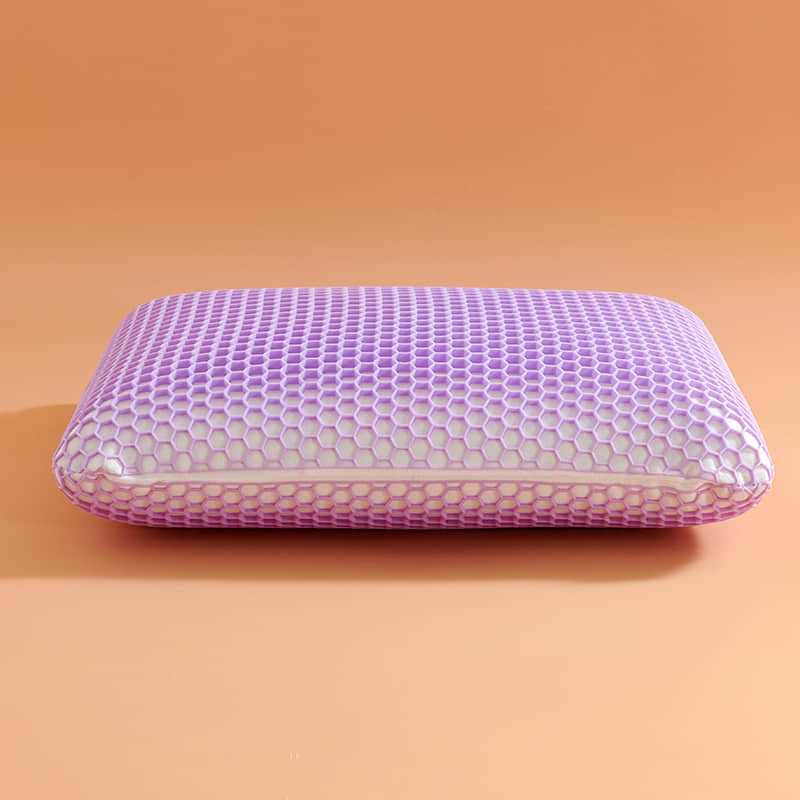
A “gel pillow” can describe a gel layer over a foam core, gel incorporated into foam, or another construction marketed under the same broad name. A “TPE pillow” may use a grid as the main cushioning structure or combine a grid with a separate support core. Before choosing a supplier or retail position, find out which assembly you are evaluating.
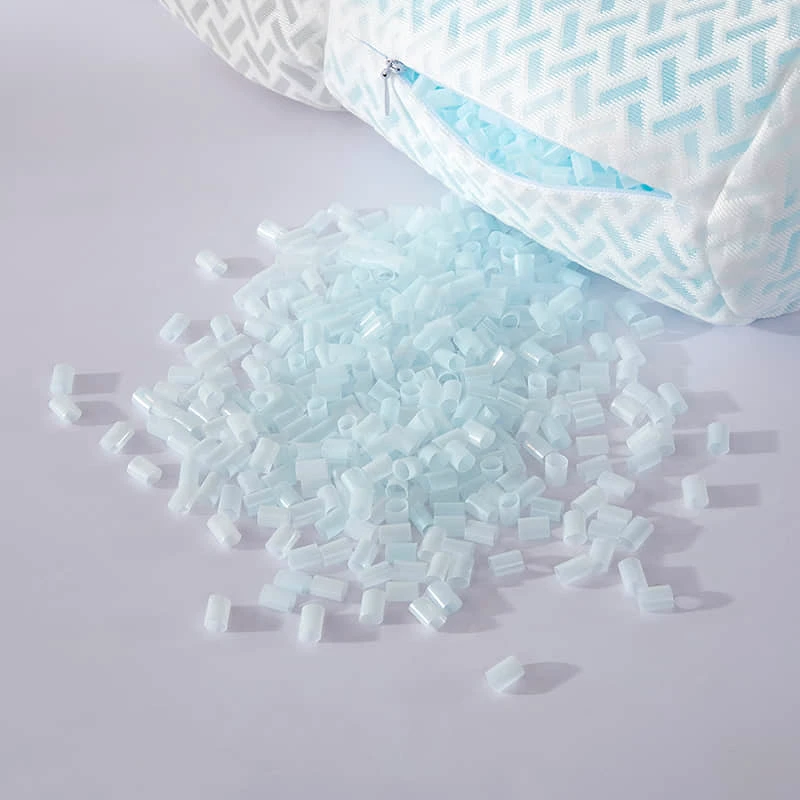
Read the pillow from the outside inward
Ask for the cover, contact layer, cushioning structure and supporting core to be identified separately. Record whether each part can be removed and how the layers are held together. A single marketing name is not a bill of materials.
TPE means thermoplastic elastomer, a family of materials combining thermoplastic processing with elastomeric flexibility. The family name does not identify a particular compound, grid design or finished-pillow performance. Do not infer that all TPE products have the same feel, care requirements or response to heat.
Memory foam is a viscoelastic foam. Its formulation and physical conditions matter to the way it responds. A gel feature adds another specification question: ask what the feature is, where it sits and how it is connected to the rest of the pillow.
| Proposed construction | What to identify | What the name does not establish |
|---|---|---|
| TPE grid cushioning | Compound reference, grid geometry, overall shape and any supporting components | Universal firmness, cooling performance or washing instructions |
| TPE grid over foam | Grid layer, foam core, layer connection and cover | The performance of a pillow made entirely from a grid structure |
| Gel layer over memory foam | Gel-layer position and coverage, foam specification and cover | The same behavior as gel incorporated within foam |
| Gel incorporated into foam | Core construction, the described gel feature and finished shape | A separate washable gel sheet or a particular cooling duration |
| Cooling-fabric cover | Fabric identity, finishing, removability and applicable test evidence | The thermal behavior of the entire pillow over a night |
Use our wholesale pillow collection to identify possible starting products. Then compare the TPE kussen, cooling grid pillow en gel memory foam pillow at the level of the selected model’s actual assembly.
Choose the buyer outcome before choosing a cooling story
Start with the intended range. Are you seeking a distinct surface feel, a particular profile, an adjustable configuration, a removable cover or a compact shipping format? Put those requirements in order. They can lead to different constructions even within the same material family.
For example, a brand whose main requirement is an easily removed cover needs to inspect the opening and layer arrangement. A brand emphasizing a lower profile needs actual finished-height measurements. Neither decision can be made from a cooling label alone.
Ask suppliers to identify which requirements their proposed model meets and which require development. Keep proposed changes separate from the standard sample so your buying team can see what remains to be evaluated.
Separate initial cool touch, airflow and sustained temperature
A surface that feels cool at first contact and a pillow that maintains a particular temperature over time involve different questions. An open grid is a visible structural feature, but its presence alone does not quantify airflow or establish a finished-pillow cooling result.
ASTM D7984 addresses the thermal effusivity of fabrics and their initial thermal sensation under specified conditions. Such a fabric result should be described at the tested fabric level. It cannot, by itself, prove that an assembled pillow will keep every sleeper cool throughout the night.
If a supplier offers a numerical cooling result, request the method, tested object, sample reference, conditions, comparison material and measurement duration. Ask whether the cover, uncovered core or assembled pillow was tested. A favorable result on one layer is useful information when its scope is retained.
For an OEM launch, decide which wording the evidence can support before building packaging around it. A measured initial-contact property and an all-night comfort claim should not be treated as interchangeable descriptions.
Compare firmness and height under the same conditions
Two pillows can have the same unloaded height while feeling different under use. Shape, core construction, layer thickness, cover tension and the way the pillow is loaded all affect the comparison. Record the measurement points and distinguish overall covered dimensions from core dimensions.
The Polyurethane Foam Association explains that ambient conditions can affect viscoelastic foam firmness and recovery. Allow samples to be compared under matched conditions and record how long they have been unpacked. A recently compressed pillow and a fully recovered display sample are not a fair comparison.
Subjective feel is still useful when collected consistently. Have reviewers compare the same identified samples, describe what they observe and separate those observations from instrument results. “Firm,” “medium” and “soft” need an agreed reference if they will guide a repeat order.
Ask for the relevant foam or material specification, but avoid treating density as a complete description of firmness or quality. Request the measurement method for any reported property and evaluate it alongside the finished construction.
Check the care route for every removable part
Do not turn “washable cover” into “washable pillow.” Identify the cover, grid, foam core, inner sleeve and any joined layers separately. Ask which parts may be washed, under what conditions, and how they should be dried before reassembly.
A material that tolerates water does not establish that adhesives, joined layers, seams or the finished shape tolerate the same process. If the pillow has several layers, test the disassembly and reassembly on the intended sample. A removable cover is of limited use if normal removal damages another component.
Approve the care wording with the product configuration. When a core, attachment or cover changes, revisit the instructions rather than copying the label from a visually similar model.
Include packing in the sample comparison
Compare the intended shipping configuration as well as the unpacked pillow. Record the packing method, packed dimensions, opening procedure and agreed recovery observations. Do not assume two materials respond equally to the same compression conditions.
Keep compression duration and recovery timing visible in the record. Where packing is an important part of the proposal, ask for a sample packed in the proposed configuration. The pillow compression and recovery guide explains how to organize those observations for packable travel models; adapt the questions to the particular home pillow without assuming the same outcome.
A matched sample comparison sheet
| Decision field | Record for each sample |
|---|---|
| Identity | Supplier model, sample revision, core and layer construction |
| Dimensions | Covered size, core size, measurement points and method |
| Gevoel | Review conditions, reviewer observations and agreed reference |
| Thermal evidence | Tested component, method, conditions and supported wording |
| Care | Instructions by component and reassembly observations |
| Packing | Pack configuration, dimensions and recovery record |
| Commercial basis | Quantity, included cover and pack, development work and quoted alternatives |
Use the sheet to identify the tradeoff your range can accept. A construction may meet the required feel but need a different pack. Another may have the intended profile but lack evidence for the planned cooling wording. Resolve those differences before selecting a sample on appearance or unit price.
Veelgestelde vragen
Is a gel grid automatically made from TPE?
No. Product names can be used inconsistently. Request the material identity and assembly description rather than assigning a polymer family from a name or photograph.
Can a cooling cover make two different cores equivalent?
No. The cover adds its own surface properties, while the underlying core and layer arrangement still need evaluation for shape, support, care and packing.
Does a material certificate prove the whole pillow’s performance?
No. Check what the document covers. A material certificate and a test of assembled-pillow behavior answer different questions and should be reviewed separately.
Prepare a pillow construction enquiry for YIXI
Send your OEM pillow comparison brief with the intended retail position, target dimensions, preferred feel, quantity, cover, packing requirements and any claim your team plans to make. Identify which attributes are essential so the discussion can focus on comparable constructions and the evidence needed for each.
 Dutch
 English
 Spanish
 Portuguese
 Russian
 German
 French
 Vietnamese
 Arabic
 Korean
 Italian
 Persian
 Thai
 Turkish
 Polish
 Indonesian