
The difference between listed weight and felt pressure
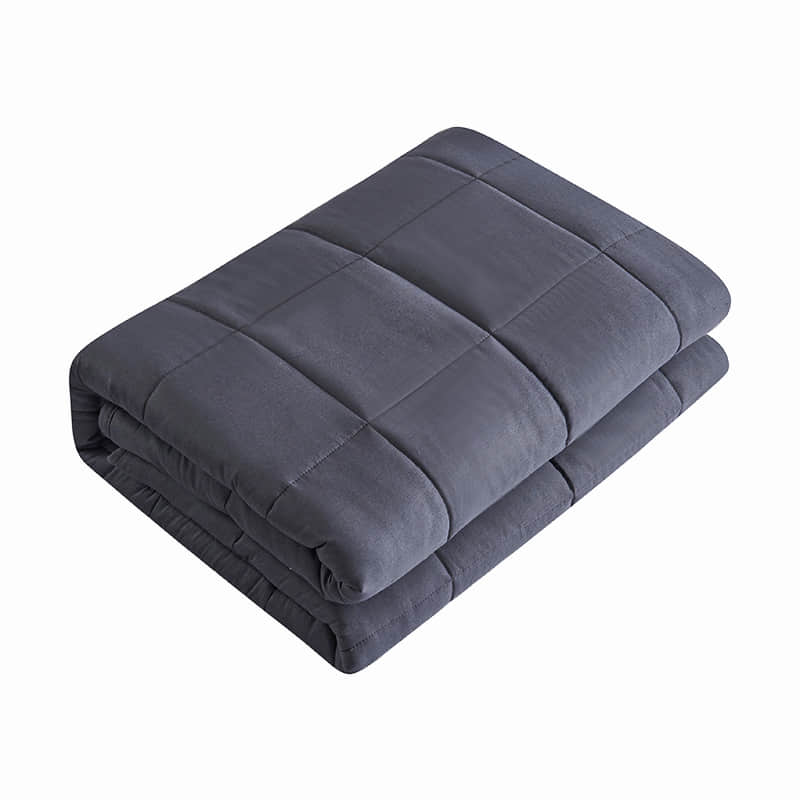
A blanket can be labeled 15 lb and still feel heavier than expected. Felt pressure depends on how that weight spreads across the body. If the filling moves toward the edges, lower side, or one corner, the user does not experience 15 lb as a smooth layer. The user experiences concentrated loading.
This matters for back comfort. Concentrated pressure over the pelvis, ribs, or shoulder may encourage awkward posture. It can also make the user tense muscles to reposition the blanket. Over time, that can turn a relaxation product into a source of stiffness.

Common causes of uneven weight distribution
- Oversized quilting pockets that allow beads to collect in one area
- Inconsistent fill quantity between pockets
- Weak stitching that opens under repeated movement
- Outer fabric that stretches more than expected
- Insufficient inner layers to stabilize glass beads
- Poor edge construction that lets weight drag downward
- Incorrect blanket size for the intended bed or body coverage
These are manufacturing issues, not marketing issues. They should be controlled before bulk production. A strong OEM/ODM process reviews material behavior, sample performance, and inspection standards before the product reaches customers.
How uneven fill can contribute to pain or discomfort
When weight shifts, the body receives uneven signals. One area may feel barely covered while another feels pressed down. A side sleeper might feel a bead cluster near the hip. A back sleeper might feel excess load over the lumbar area. A user who changes position may drag concentrated weight across the body, making movement harder.
This does not mean weighted blankets are inherently unsafe. It means design quality matters. Clinical and sleep related studies usually discuss weighted blankets in terms of deep pressure stimulation, but commercial product quality determines how that pressure is actually delivered at home.
Technical checks buyers should request
Professional buyers should not rely only on sample appearance. They should request or perform structured checks. These checks help compare factories and reduce the risk of inconsistent bulk shipments.
| Quality point | What to check | Why it matters |
|---|---|---|
| Weight tolerance | Actual weight versus specification | Prevents misleading pressure levels |
| Pocket consistency | Similar fill amount across quilted zones | Improves comfort and reduces pressure points |
| Stitch strength | Seam resistance after pulling and handling | Prevents bead movement and leakage |
| Drape test | How blanket conforms to shoulders and hips | Affects mobility and user comfort |
| Wash simulation | Fill movement after care testing | Protects long term customer satisfaction |
| Edge stability | Whether sides pull downward too strongly | Reduces drag and trapped feeling |
Bead filled versus knitted construction
Bead filled weighted blankets can offer precise weight options and soft fabric variety. They are widely used in Wholesale markets because they are scalable and cost effective. The main challenge is fill control. Glass beads need stable pocketing, inner fabric layers, and reliable stitching.
Knitted weighted blankets use heavy yarn to create weight. Because the weight is part of the textile structure, there are no loose beads to migrate. This can improve airflow and create a flexible drape. The challenges are different: yarn quality, knot security, shrinkage, pilling, elasticity, and dimensional stability. Neither construction is automatically superior. The right choice depends on channel, price point, climate, design style, and target user.
Why sizing affects weight distribution
A weighted blanket should generally sit on the user rather than hang far over the sides of a bed. Excess overhang can pull the blanket downward, making it harder to move under and increasing the sensation of weight. Retail listings that present weighted blankets like normal comforters may create unrealistic expectations.
For B2B buyers, this means size charts should be written carefully. A twin, throw, queen, or king label is not enough. The page should explain whether the blanket is designed for one user or shared use, whether it should cover the mattress edges, and how to choose between weights.
Quality control language that helps Google and buyers
Search engines increasingly reward content that answers specific questions with experience and detail. Instead of saying high quality weighted blanket, a product page or blog can explain exactly what quality means: controlled weight tolerance, small pocket quilting, reinforced stitching, stable glass beads, breathable covers, washable construction, and inspection before shipment.
This language also helps human buyers. A purchasing manager comparing suppliers wants evidence that a factory understands the product. YIXI emphasizes inspection processes, Customizable development, and export manufacturing experience, which can be presented lightly in content as proof of capability rather than repetitive promotion.
How to write product specifications for better results
Clear specifications reduce errors. A buyer should define blanket dimensions, target weight, acceptable tolerance, fill type, fabric GSM, pocket dimensions, stitch type, cover design, color standard, label position, packaging style, carton requirements, and testing expectations. For private label projects, the specification should also include instruction card content and claim limits.
When specifications are vague, factories may make reasonable but different assumptions. That can lead to a product that meets price expectations but fails comfort expectations. For weighted blankets, comfort is a technical result, not only a subjective feeling.
How inspection should simulate real customer handling
A factory inspection should do more than check measurements on a flat table. Weighted blankets are lifted, folded, dragged across a bed, packed into storage bags, washed, dried, shaken, and used by people who move during sleep. A realistic inspection process should include repeated folding, corner lifting, edge pulling, drape evaluation, and visual checks for bead concentration. These simple actions often reveal problems that a flat visual inspection misses.
For export orders, buyers can request a pre shipment inspection plan that includes weight verification by carton sample, seam review, needle control records, fabric defect checks, color comparison, label placement, polybag warning review, and carton drop considerations where relevant. This level of detail helps protect the buyer and the end consumer. It also separates a serious weighted blanket Manufacturer from a general textile vendor that happens to quote a low price.
Why content should explain these details to shoppers
Technical quality is not only for the purchasing department. End users also want to know why one weighted blanket costs more than another. A product page can explain that small pocket quilting helps keep pressure balanced, reinforced seams reduce fill movement, breathable covers improve comfort, and correct sizing helps prevent edge drag. These points educate the shopper and make the product easier to compare.
For Google ranking, this depth matters. Search results are full of repeated claims about calm sleep and soft touch. A page that explains distribution, mobility, posture, and quality control gives search engines more specific information to understand. It also gives buyers stronger reasons to send an inquiry instead of choosing only by price.
How better distribution can support product reviews
Weighted blanket reviews often mention feelings rather than engineering details. Customers say the blanket feels balanced, does not bunch, stays in place, or feels easy to sleep under. Those positive comments usually come from good distribution control. Negative reviews often use the opposite language: lumpy, sliding, too heavy in one corner, hard to move, or uncomfortable on the hips. These review patterns affect conversion on retail sites and marketplaces.
For a Wholesale buyer, this means distribution quality has direct commercial value. A cheaper blanket with unstable filling may look acceptable at launch but create return costs later. A better controlled blanket gives the brand more stable ratings, fewer service questions, and stronger repeat orders. When comparing factories, buyers should therefore treat weight distribution as a profit protection issue, not only a comfort detail.
FAQ
Why does my weighted blanket feel heavier on one side?
The fill may have shifted because of large pockets, weak stitching, poor edge construction, or normal use that the product was not designed to withstand.
Is glass bead filling a problem?
No. Glass beads can work well when the blanket has stable quilting, correct inner layers, and strong stitching.
Are knitted weighted blankets always more comfortable?
Not always. They are breathable and flexible, but some users prefer the smoother surface and exact weight options of bead filled blankets.
What should a Wholesale buyer inspect first?
Start with actual weight, fill distribution, stitching, drape, and user movement under the blanket.
Can uneven weight distribution cause back discomfort?
It can contribute to discomfort by creating pressure points or making movement harder, especially for side sleepers and users with existing back sensitivity.


 English
  Spanish
  Portuguese
  Russian
  German
  French
  Vietnamese
  Arabic
  Korean
  Italian
  Persian
  Thai
Thai  Turkish
  Dutch
Dutch  Polish
  Indonesian